显微镜知识库

显微镜知识库

显微镜知识库

徕卡显微系统的知识库提供有关显微镜学科的科学研究和教学材料。内容旨在对显微镜初学者、有经验的显微镜操作实践者和使用显微镜的科学家在他们的日常工作和实验有所帮助。这里有探索交互式教程和应用笔记,你可以找到你需要的显微镜的基础知识以及前沿技术——快来加入徕卡显微知识社区,分享您的专业知识!
Image: Adult rat brain. Neurons (Alexa Fluor488, green), Astrocytes (GFAP, red), Nuclei (DAPI, blue). Image courtesy of Prof. En Xu, Institute of Neurosciences and Department of Neurology of the Second Affiliated Hospital of Guangzhou Medical University, China.

多色显微成像:多通道的重要性

多通道一词是指使用多种荧光染料来检查一个样本中的不同元素。多通道成像可以同时观察相关组分和过程,从而为您的观察添加更多背景信息,最终提供更有意义的结果。它还有助于观察采用其他方法可能会遗漏的相互依赖性。

High-resolution 3D Imaging to Investigate Tissue Ageing

Award-winning researcher Dr. Anjali Kusumbe demonstrates age-related changes in vascular microenvironments through single-cell resolution 3D imaging of young and aged organs.

优化 THUNDER 平台以实现高内涵玻片扫描

随着对全组织成像需求的不断增长以及对不同生物标本中 FL 信号定量的需要,HC 成像技术的极限受到了考验,而核心设备的用户可培训性和易用性则成为了成本和效率的问题。在这里,我们展示了在我们的设施中为THUNDER平台开发的可行工作流程,以支持从 KO-小鼠组织分析到人类癌症的各种研究环境需求。
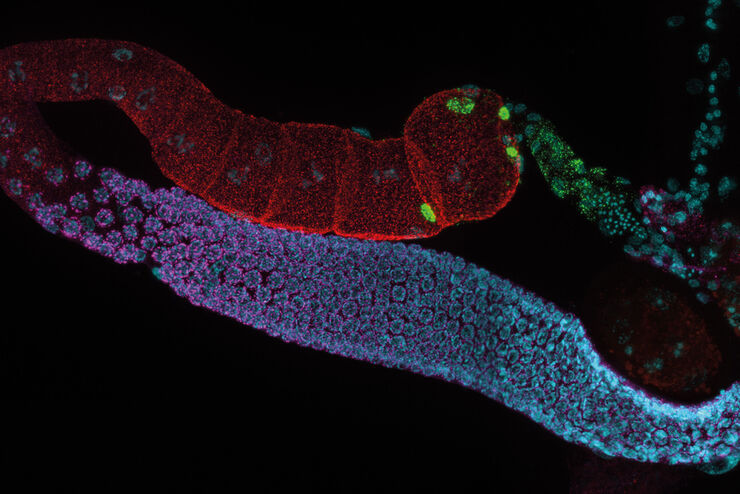
C. elegans Gonades - THUNDER Imager  Adult hermaphrodit, Staining: blue - DAPI (Nucleus), green - SP56 (sperms), red - RME-2 (oocyte), mangenta - PGL-1 (RNA + protein granules) Image courtesy of Prof. Dr. Christian Eckmann, Martin Luther University, Halle, Germany

生理学图片库

生理学是关于生物体内的过程和功能。生理学研究的重点是生物体器官、组织或细胞的活动和功能,包括所涉及的物理和化学现象。在此,我们以不同的样本为例,向您展示与生理学有关的图片。
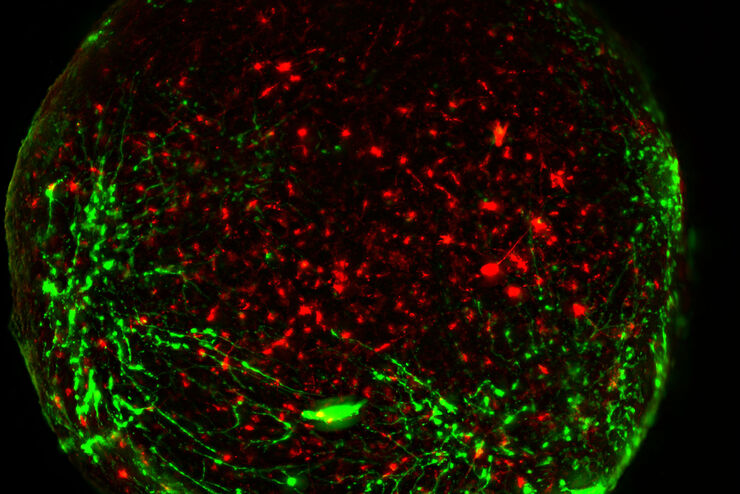
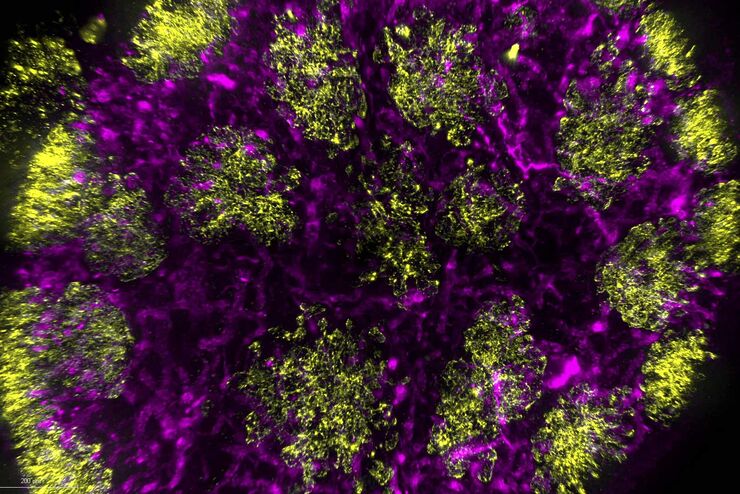
Virally labeled neurons (red) and astrocytes (green) in a cortical spheroid derived from human induced pluripotent stem cells. THUNDER Model Organism Imagerwith a 2x 0.15 NA objective at 3.4x zoomwas used to produce this 425 μm Z-stack (26 positions), which is presented here as an Extended Depth of Field(EDoF)projection.

神经科学图像

神经科学通常使用显微镜来研究神经系统的功能和了解神经退行性疾病。
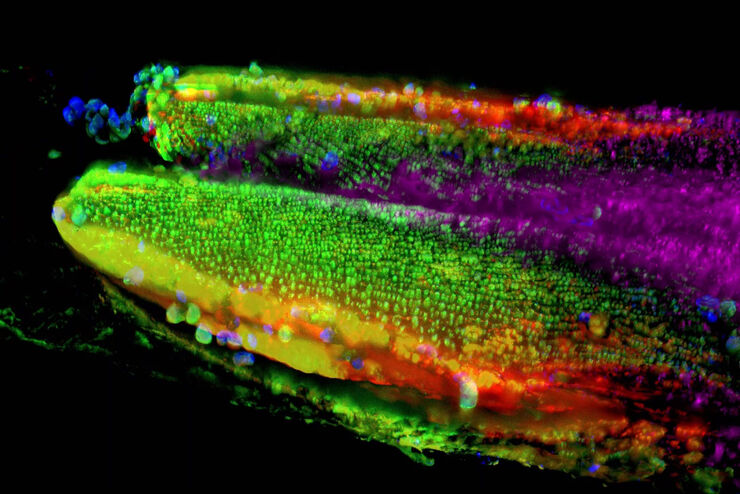
Pollen Flower - Taken with a 20x/0.8 objective, area of 6mm² with a depth of 100μm. 15 stitched tiles with 4 colors (DAPI/GFP/TRITC/Cy5) - a total of 13020 images. Video courtesy of James Marr, Leica Microsystems, USA

发育生物学图片库

发育生物学探索复杂生物体从胚胎到成年的发育过程,以详细了解疾病的起源。图库的这一类别显示有关发育生物学的图像,即通常以昆虫、蠕虫、动物和植物为研究对象的图像。
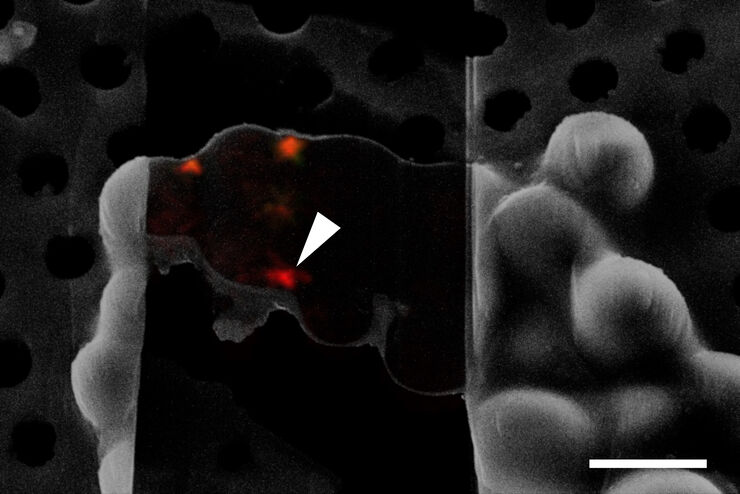
Cryo FIB lamella - Overlay of SEM and confocal fluorescence image. Target structure in yeast cells (nuclear pore proteine Nup159-Atg8-split Venus, red) marked by an arrow. Scale bar: 5 µm. Alegretti et al.,  Nature 586, 796-800 (2020).

使用冷冻共聚焦显微镜定位活性循环核孔复合物

本文介绍了如何利用冷冻光学显微镜,尤其是冷冻共焦显微镜来提高冷冻工作流程的可靠性。评估了EM网格和样品的质量,并分析了目标结构的分布。本文展示了如何将冷冻共焦3D数据投射到SEM图像上,将感兴趣结构可靠地保留在FIB切割的薄片内,以便在冷冻TEM中进行进一步研究。
Mouse kidney section with Alexa Fluor™ 488 WGA, Alexa Fluor™ 568 Phalloidin, and DAPI. Sample is a FluoCells™ prepared slide #3 from Thermo Fisher Scientific, Waltham, MA, USA. Images courtesy of Dr. Reyna Martinez – De Luna, Upstate Medical University, Department of Ophthalmology.

自适应反卷积与 Computational Clearing 结合的力量

反卷积是一种计算方法,用于恢复被点扩散函数(PSF)和噪声源破坏的物体图像。在本技术简介中,您将了解徕卡显微系统提供的反卷积算法如何帮助您克服宽视场 (WF) 荧光显微镜中由于光的波动性和光学元件对光的衍射而造成的图像分辨率和对比度损失。探索由用户控制或自动反卷积的方法,查看并解析更多的结构细节。
Mouse lymphnode acquired with a THUNDER Imager 3D Cell Culture. Image courtesy of Dr. Selina Keppler, Munich, Germany.

Image Gallery: THUNDER Imager

To help you answer important scientific questions, THUNDER Imagers eliminate the out-of-focus blur that clouds the view of thick samples when using camera-based fluorescence microscopes. They achieve…
Scroll to top