
工业

工业

工业

深入探讨有关工业和病理学领域的高效检测、优化工作流程和提高人体工学舒适度的文章和网络研讨会。涉及的主题包括质量控制、材料分析、病理学显微镜等。在这里您可以获得有关使用前沿技术提高生产力和优化质量以及准确地进行病理学诊断的干货。
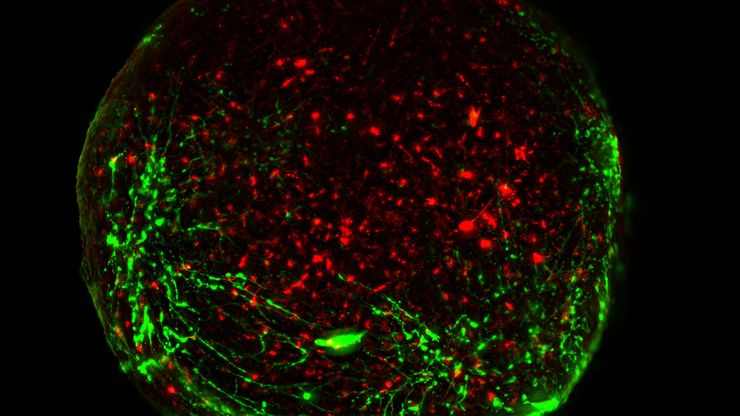
Virally labeled neurons (red) and astrocytes (green) in a cortical spheroid derived from human induced pluripotent stem cells. THUNDER Model Organism Imager with a 2x, 0.15 NA objective at 3.4x zoom was used to produce this 425 µm Z-stack (26 positions) which is presented here as an Extended Depth of Field (EDoF) projection. Images courtesy of Dr. F. Birey, Dr. S. Pasca laboratory, Palo Alto, CA.

活细胞成像指南

在生命科学各研究领域的广泛应用中,活细胞成像是一种不可或缺的工具,用于观察细胞在尽可能接近活体(即活的、活跃的)状态下的情况。本指南回顾了确保成功进行活细胞成像的各种重要注意事项,并介绍了各种旨在克服常见挑战的高性能解决方案。这些进展使我们能够对细胞生理学和动力学有新的认识。
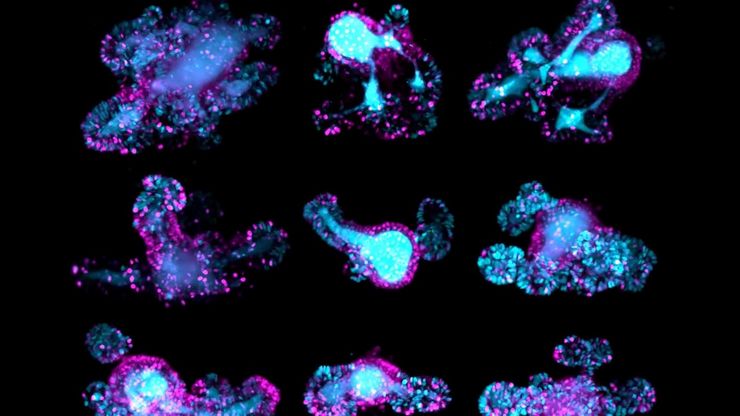
67-hour, multi-position time-lapse of mouse intestinal organoids expressing the cell cycle reporter FUCCI2 (hGem-mVenus and hCdt1-mCherry).

利用光片显微技术聚焦三维长时程成像

长时程三维成像揭示了复杂的多细胞系统是如何生长和发育的,以及细胞是如何随着时间的推移而移动和相互作用的,从而揭示了发育、疾病和再生方面的重要知识。光片显微镜一次只照射样品的一个薄片,大大减少了光损伤,保护了样品的活性。这种温和的高速技术可在数小时甚至数天内提供清晰的体数据,使研究人员能够实时捕捉生物学的发展过程。
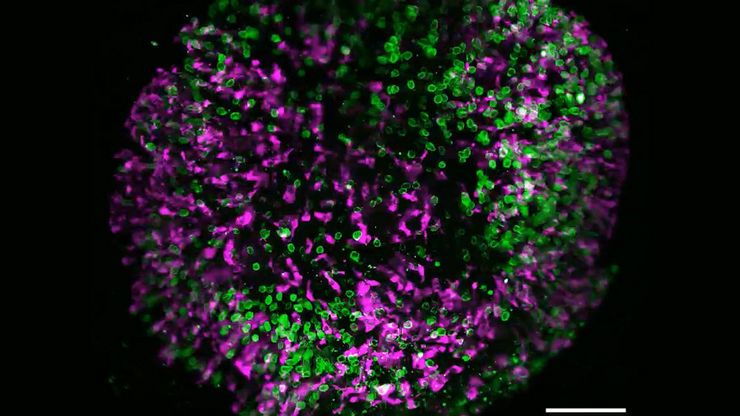
Brain organoid labeled with lamin (green) and tubulin (magenta), acquired using Viventis Deep. Courtesy of Akanksha Jain, Treutlein Lab ETH-DBSSE Basel (Switzerland).

如何深入了解类器官和细胞球模型

在本电子书中,您将了解3D细胞培养模型(如类器官和细胞球)成像的关键注意事项。探索创新型显微镜解决方案,来实时记录类器官和细胞球的动态成像过程。
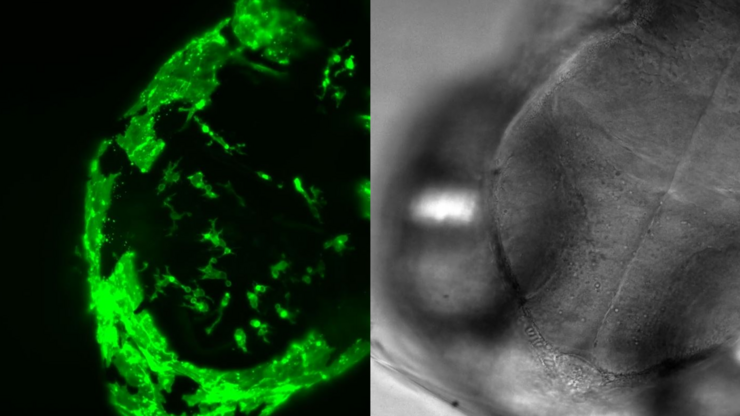
5 hour time-lapse maximum intensity projection of a zebrafish embryo along the z-axis at 3 days post fertilization. Left: microglia cells. Right: bright field channel. Courtesy of Prof. Francesca Peri, University of Zurich, Switzerland.

来捕捉发育动态的3D成像

本应用说明展示了研究人员如何成功利用 Viventis Deep 双视角光片显微镜探索3D多细胞模型(包括有机体、球形体和胚胎)的高分辨率长期成像,从而为发育生物学和疾病研究带来新的可能性。
Developing embryos of different species at different stages during the elongation of their posterior body axis, from left to right in developmental time. The labelled regions in red depict a region of undifferentiated cells called the tailbud, with the corresponding region generated from that tissue shaded in grey. Upper row: lamprey; middle row: catshark; bottom row, zebrafish. This figure has been adapted from the following publication: Steventon, B., Duarte, F., Lagadec, R., Mazan, S., Nicolas, J.-F., & Hirsinger, E. (2016). Species tailoured contribution of volumetric growth and tissue convergence to posterior body elongation in vertebrates. Development, 2016. 143(10):1732-41

如何研究胚胎发育过程中的基因调控网络

请与 Andrea Boni 博士一起参加本次点播网络研讨会,探索光片显微镜如何彻底改变发育生物学。这种先进的成像技术可对三维样本进行高速、容积式实时成像,且光毒性极低。通过用户实例了解光片显微镜如何增强我们对肠道和大脑类器官发育的理解,并深入了解徕卡显微系统公司的 Viventis Deep 显微镜背后的技术及其在长期成像中的应用。
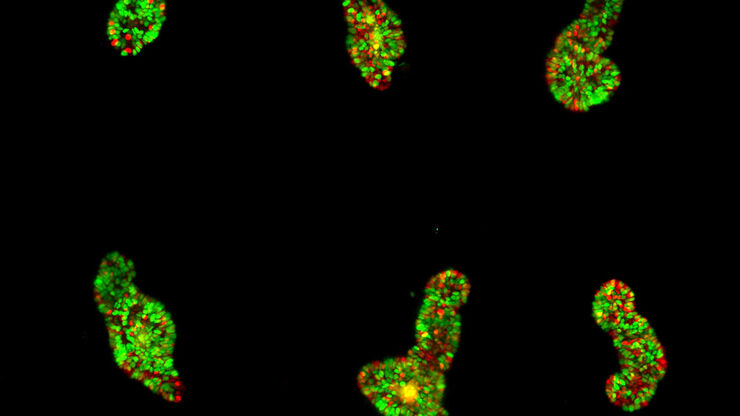
Intestinal organoids label with FUCCI reporter to follow cell cycle dynamics. Courtesy of Franziska Moos. Liberali lab. FMI Basel (Switzerland).

双视野光片显微镜,适用于大型多细胞系统

展示复杂多细胞系统的动态是生物学中的一个基本目标。为了应对在大型时空尺度上进行活体成像的挑战,作者在《自然·方法》杂志上发表的一篇论文中介绍了一种开放式多样本双视野光片显微镜。研究发现,Viventis LS2 Live显微镜在以单细胞分辨率成像大型样本方面取得了显著进展。
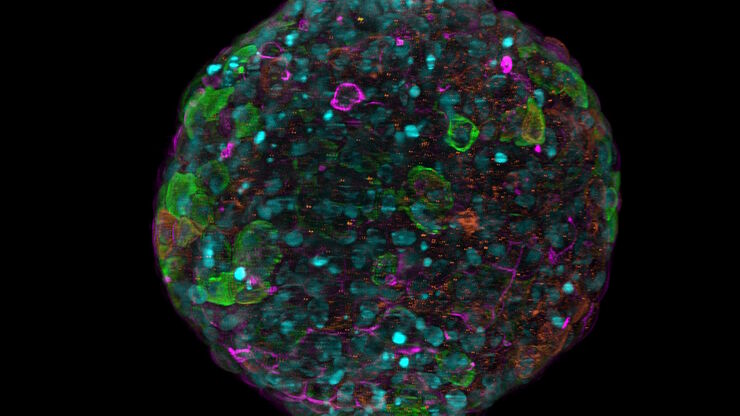
Spheroid stained with Cyan: Dapi nuclear countertain; Green AF488 Involucrin; Orange AF55 Phalloidin Actin; Magenta AF647 CK14.

基于人工智能的表型药物筛查解决方案

本次网络研讨会将全面介绍使用三维细胞培养进行表型药物筛选所遇到的问题、可能的解决方案及规划与执行策略。
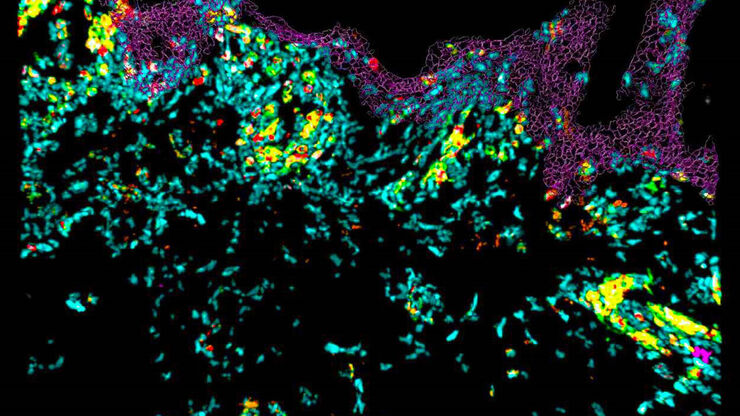
免疫细胞在组织样品中的共聚焦成像

在本次网络研讨会中,您将探索如何使用共聚焦显微镜对组织样品进行10色成像,并了解这一技术如何有助于评估皮肤免疫状况。
Dual color volume rendering of Drp1 oligomers (green) and mito OM (red) in a live U2OS cell

多色四维超分辨光片显微镜

人工智能显微术研讨会主要关注和讨论显微术和生物医学成像领域的最新人工智能技术和工具。在该科学演示中,Yuxuan Zhao展示了如何通过渐进式深度学习策略并结合“双环调制的SPIM”设计改善活细胞中的细胞器三维成像。
Scroll to top